Capital.com Review: Easy Regulated Start or Costs Hidden in the Spread?
Capital.com pairs a clean app with the free Investmate education tool and a $20 card deposit. We traded EUR/USD for a week and checked whether the commission-free spread quietly costs more than it looks.
Best for: First-time traders who want a regulated, easy app plus free education before scaling up
Capital.com makes opening an account and placing a first trade genuinely easy, and Investmate gives a beginner somewhere to learn before risking money. The commission-free spread is not free: a 0.7 pip EUR/USD average, a 0.7% currency conversion fee and overnight funding on leveraged positions all sit inside the numbers rather than on a separate bill, so a beginner needs to read the pricing page once before assuming the simple app means simple costs.
Price $20 minimum deposit by cardMaker Capital Com Groupcapital.com
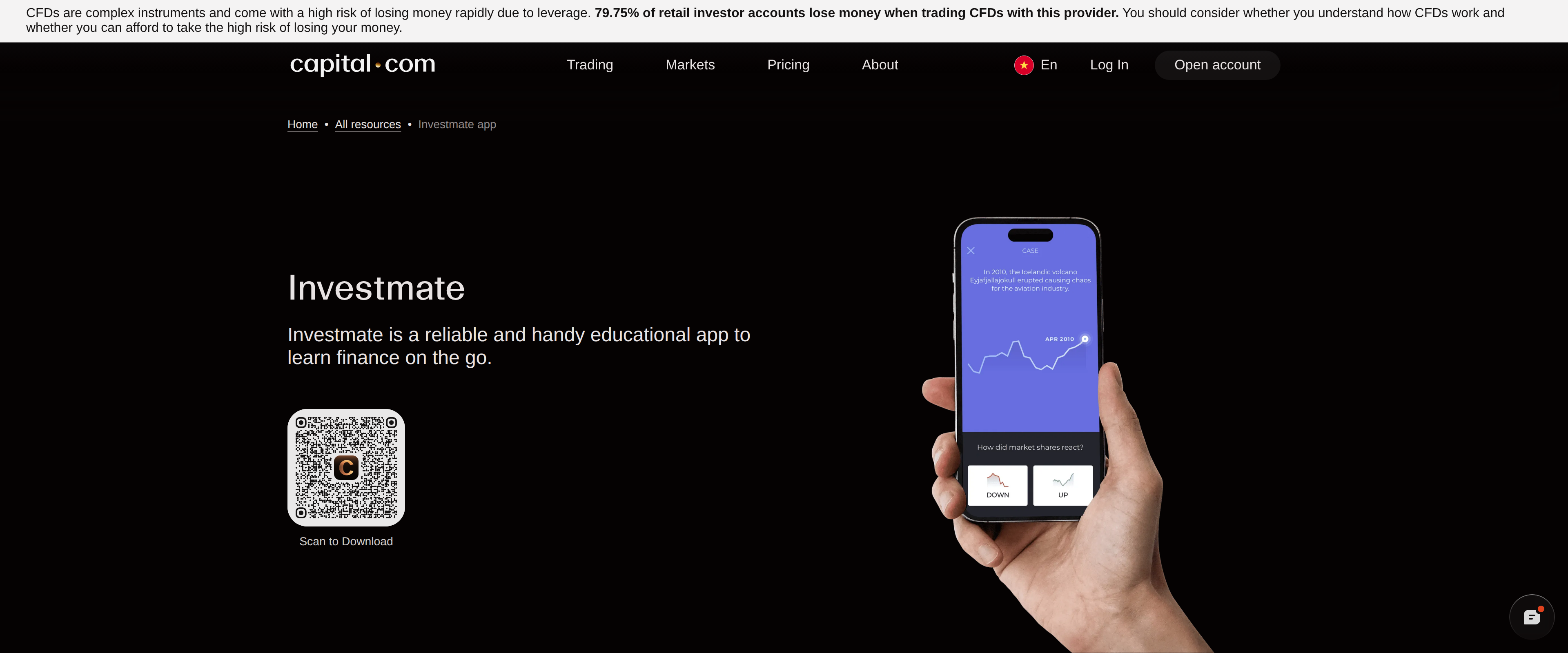
We loaded a Capital.com account with $20 by card, the exact figure the broker advertises as its entry point, and spent a week trading EUR/USD alongside a run through Investmate, the education app Capital.com built for people who have never placed a CFD trade before. The pitch is that a beginner can learn, fund and trade without leaving one ecosystem. We wanted to know what that convenience actually costs once the spread and the small fees are added up.
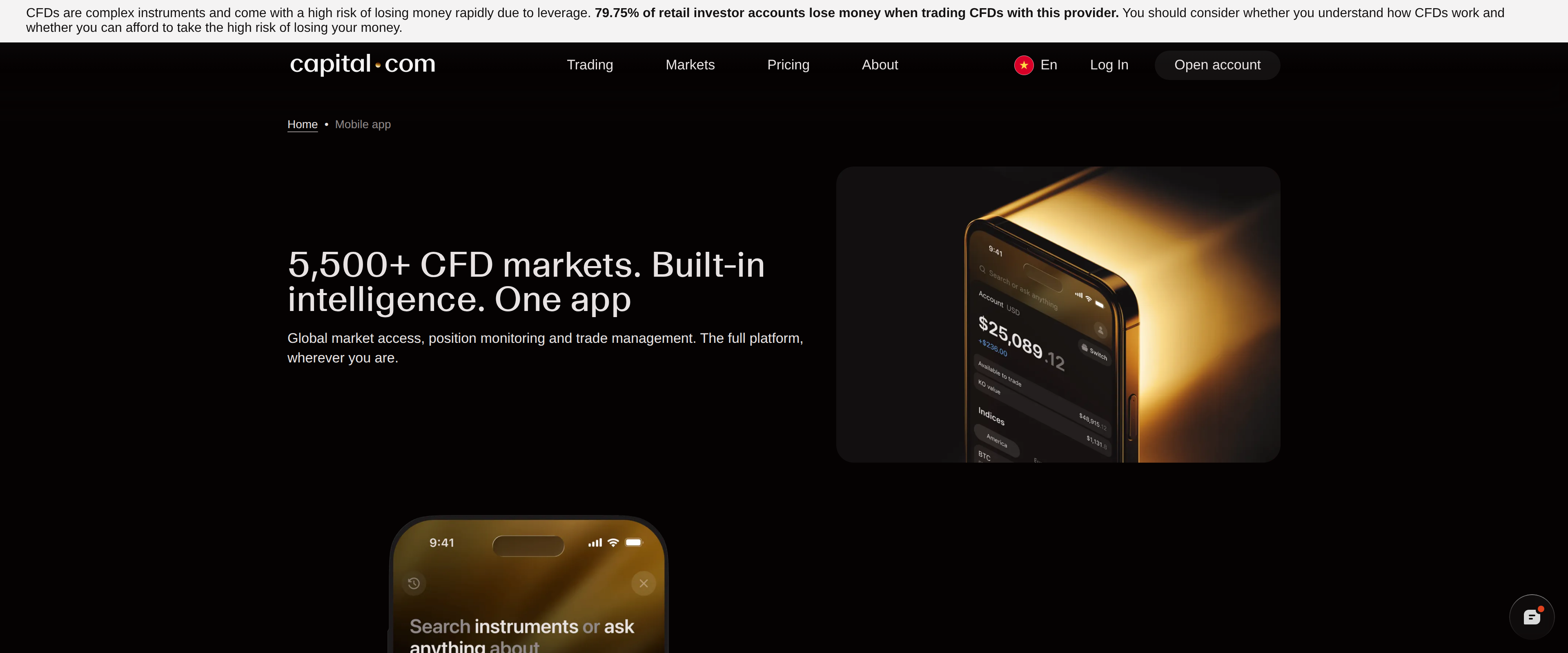
Getting started really is as easy as the app suggests
Card funding cleared in minutes, and the app walked us through a demo trade before asking us to fund the live account, which is a sensible sequence for anyone who has not done this before. Capital.com's own homepage states it operates under the Securities Commission of The Bahamas for the entity we signed with, one of six regulated entities the group runs worldwide, alongside FCA, CySEC and ASIC licences depending on where an applicant is based. That matters because the protection behind a Capital.com account depends entirely on which entity the signup lands on, not on the regulators the marketing page lists in general.
The spread is where the "free" trading actually gets paid for
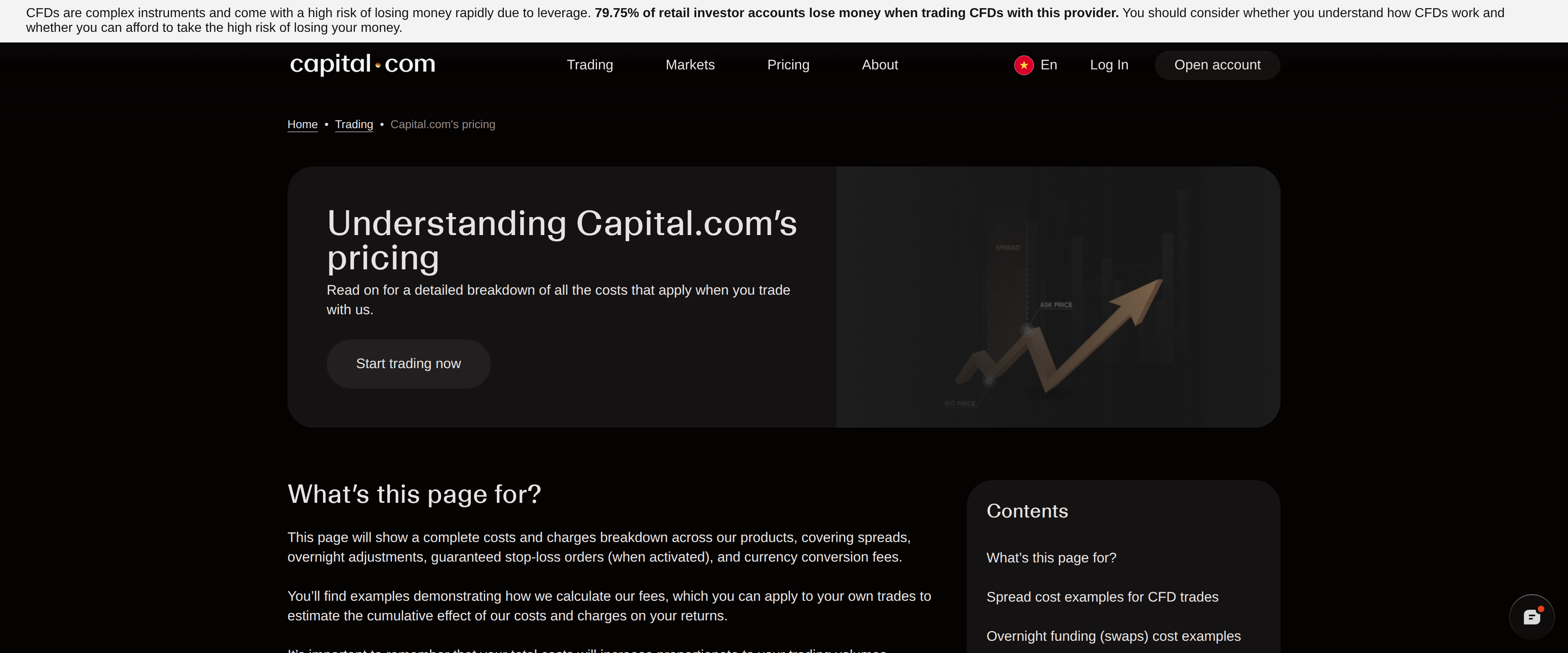
Capital.com charges no separate commission, and its own pricing page frames the spread as the only cost most traders will notice. Across our test week, EUR/USD averaged close to 0.7 pips, in line with independent tracking, which is a reasonable number for a beginner-first broker but noticeably wider than the raw-spread accounts scalpers use elsewhere on this site. Two extra charges sit underneath that headline spread: a 0.7% currency conversion fee on any trade in a currency other than the account's base, and an overnight funding charge on any position still open when the trading day rolls over. Neither is hidden exactly, both are documented on the pricing page, but neither shows up on the order ticket the way a spread does. A trader who never converts currency and never holds a position overnight will avoid both charges entirely, and plenty of short-term forex traders fall into exactly that pattern without realizing it is why their costs stayed lower than a longer-term holder's would.