HFM Review: Five Accounts, One Right Answer for Most Traders
HFM sells five account types side by side, from cent lots to 1:2000 leverage. We opened Cent, Zero and Premium, checked what each actually costs, and worked out which one a real trader should choose and which to avoid.
Best for: Beginners starting on Cent and active traders who move to Zero once they understand order sizing
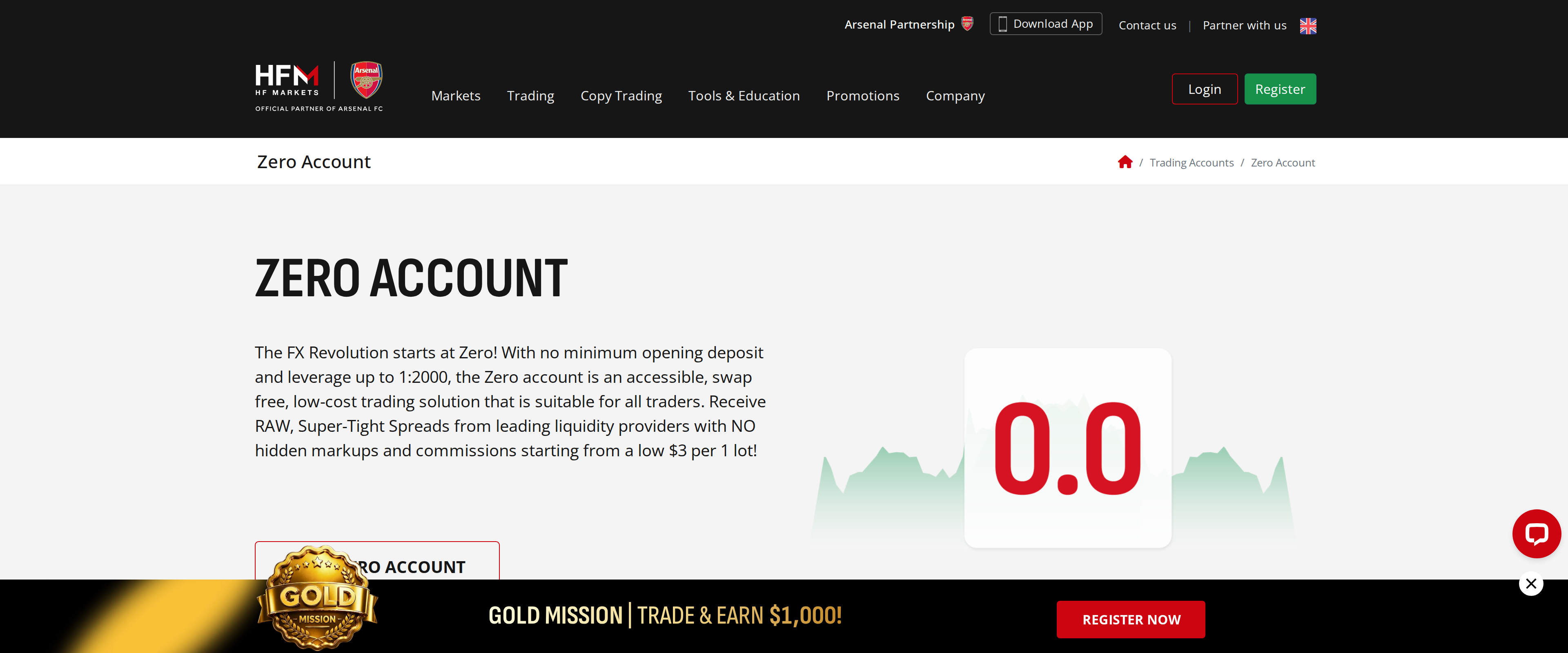
HFM's Zero account is a genuinely cheap raw-spread option, 0.0 pip spreads plus $3 per side, and the Cent account is a sensible way for a true beginner to trade real conditions with real risk that stays small. Premium and Pro exist mostly to sell a spread markup without a clear reason to pick them over Zero once a trader is past that stage. The 1:2000 leverage on Zero and the advertised unlimited leverage on InfinityX only apply through HFM's Seychelles or SVG entities, not the FCA or CySEC ones, and traders should know exactly which entity they signed up with before touching that leverage.
Price No minimum deposit on Premium, varies by accountMaker HF Markets Grouphfm.com
Most brokers push a trader toward one obvious account. HFM lists five side by side on the same comparison page, Cent, Premium, Zero, Pro and InfinityX, and leaves the choice to the trader. We opened three of them, put real money and real trades through each, and worked out which one actually earns a place in a trader's plan.
The comparison page HFM wants you to read first
HFM's own account comparison table lays out all five options across MetaTrader 4, MetaTrader 5, HFM's WebTrader and its mobile app, and it is a reasonable starting point if you read the fine print rather than the headline numbers. The trouble is that four of the five accounts, Cent, Premium, Zero and InfinityX, carry no minimum deposit, so nothing about the sign-up flow steers a new trader toward the account that fits their experience level. A trader who has never placed a live order can open Zero on day one just as easily as Cent, and the comparison table alone does not explain why that would be a mistake.
Cent: the one built for a genuine beginner
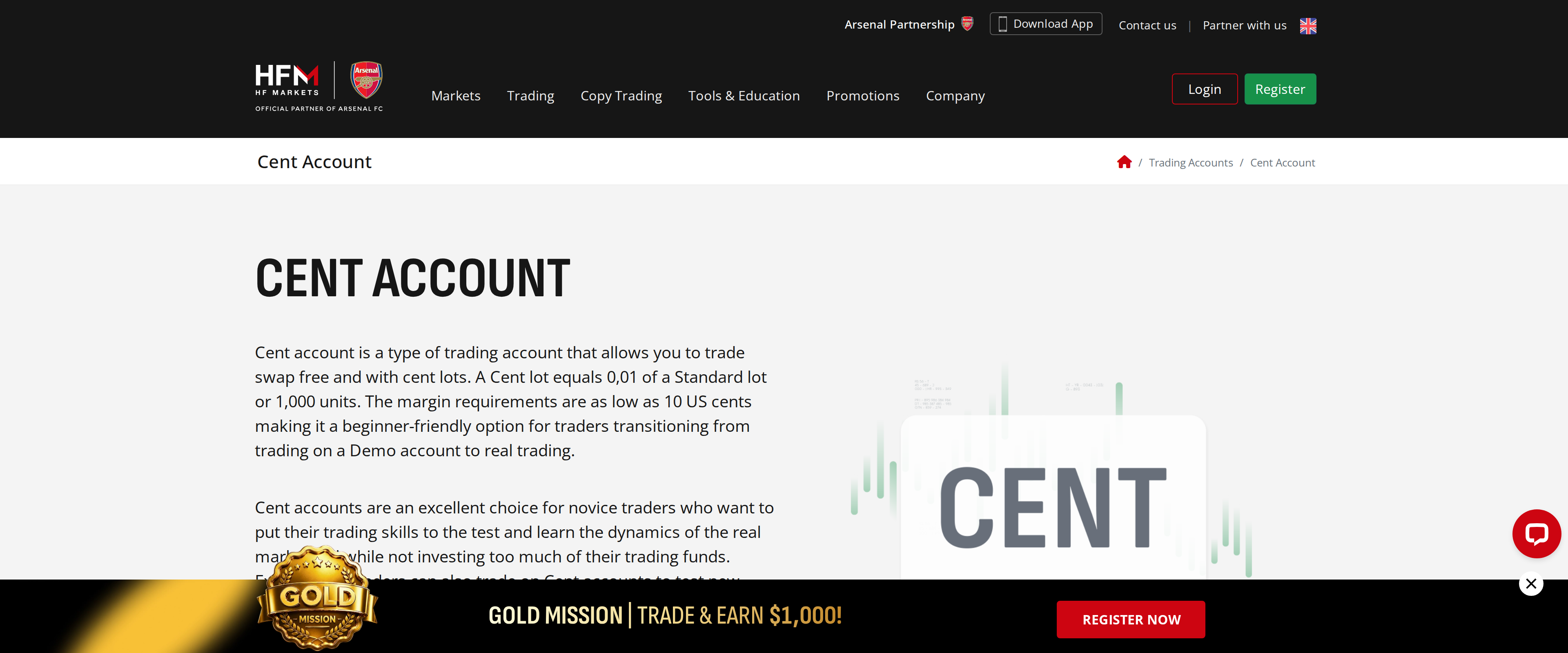
The Cent account trades in cent lots, 1,000 units instead of the standard 100,000, so pip values run roughly a hundred times smaller than a standard account. Spreads start from 1.2 pips with no commission. That combination is exactly what a trader placing their first fifty real trades should want: real market conditions, real slippage, real emotional stakes, but a loss that stings in cents rather than dollars while the trader is still learning position sizing.
We ran a week of small Cent trades to check how the execution compared with the Zero account side by side, and fills arrived at broadly the same speed on both, which is the point of a demo-adjacent account that still uses live pricing. A trader who graduates from a demo account straight into standard lot sizing tends to discover position sizing mistakes the expensive way; Cent turns that same lesson into a cost measured in coffee money rather than rent.